

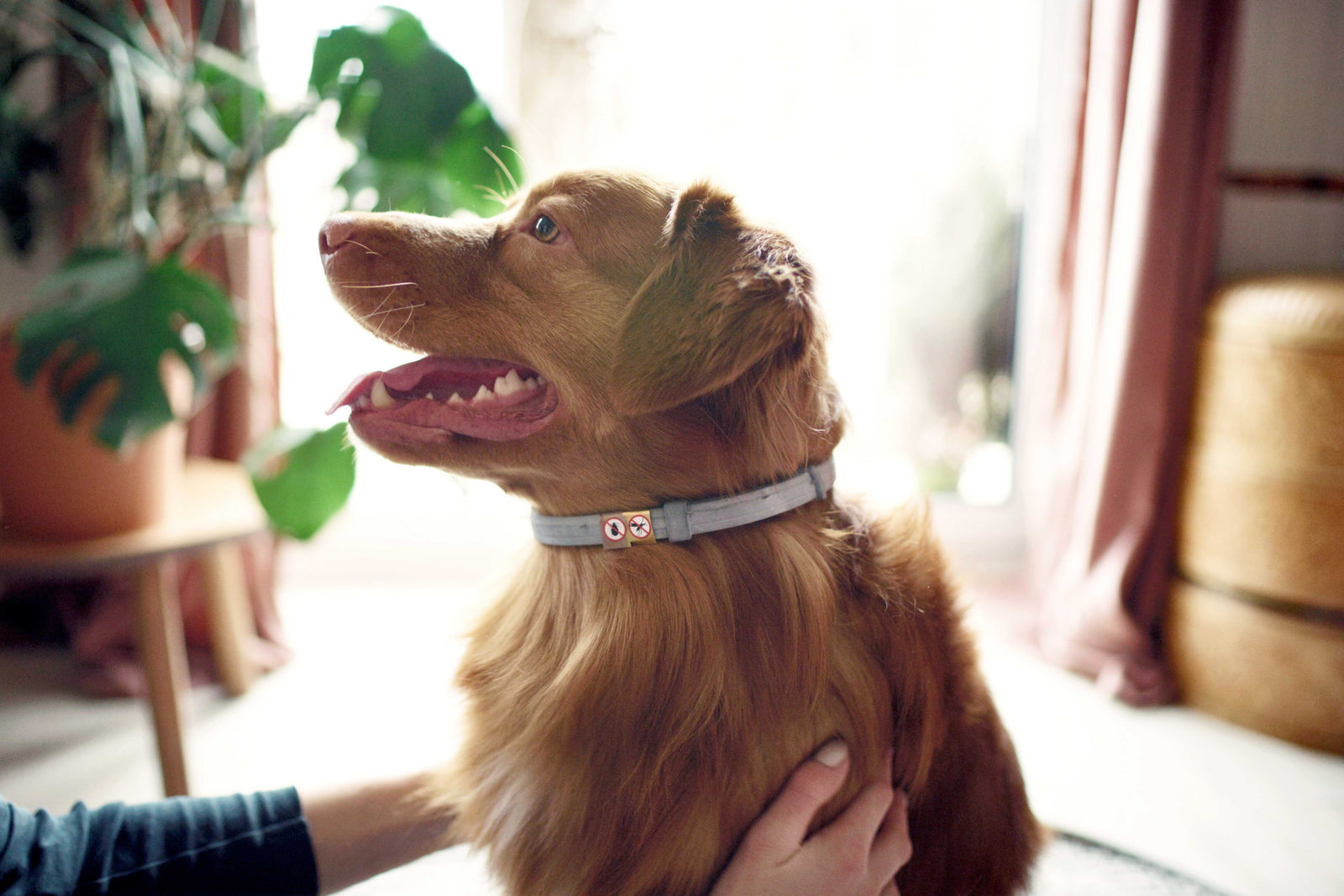

Flea collars for dogs can be a practical option for owners who want longer-lasting flea and tick protection without giving a chew or applying a spot-on. They are simple to use, but they still need to fit properly, suit the dog, and be used according to the product directions.
A flea and tick collar is worn around your dog's neck and is designed to provide ongoing protection while the collar is in place.
Unlike a chew or spot-on, there is no regular dose to give or liquid to apply to the skin. The collar stays on the dog and works according to its own replacement schedule.
That can make collars appealing to owners who prefer a low-maintenance routine.
Seresto® Flea & Tick Collar for Dogs is one example of this type of treatment.
The biggest reason is convenience.
A collar can suit owners who do not want to remember a chew or topical application as often. Once it is fitted correctly, it becomes part of the dog's normal routine.
A collar may also be worth considering if:
your dog refuses chewable treatments
you prefer not to apply a liquid treatment
you want longer periods between treatment tasks
your dog already wears a collar comfortably
For some households, that simplicity is the main advantage.
Fit matters.
A flea and tick collar needs to sit correctly against the dog without being too tight or too loose.
You should be able to follow the fitting instructions supplied with the product and check the collar regularly, especially if your dog is still growing.
A collar that is too loose may not sit as intended. A collar that is too tight can be uncomfortable.
It is also worth checking the fit after grooming, weight changes or periods of rapid growth.
Not necessarily.
A flea and tick collar is designed around external parasite protection. It should not automatically be treated as a complete replacement for every other part of your dog's parasite care.
If you are using a collar, check exactly what it is intended to cover and make sure the rest of your dog's parasite routine is still accounted for.
This is especially important if you are switching from another product that may have covered different parasites.
No single treatment format suits every dog.
A collar may be a good fit for one dog and a poor fit for another.
Some dogs are perfectly comfortable wearing one. Others may scratch at it, chew at it or simply dislike having an additional collar around their neck.
Dogs with sensitive or irritated skin may also need extra consideration before using a collar.
If your dog develops redness, irritation or unusual discomfort around the neck, remove the collar and ask your veterinarian what to do next.
Water exposure can matter, depending on the collar.
If your dog swims regularly, gets bathed often or spends a lot of time outdoors in wet conditions, check the product directions before choosing a collar.
Some collars are designed to keep working through normal water exposure, while frequent swimming or bathing may affect how long protection lasts.
The important point is not to assume that every flea collar reacts to water in the same way.
Read the directions for the exact product you use.
They can be.
Dogs that spend time on farms, ranches, acreage or wooded property may have more opportunities to encounter fleas and ticks, so keeping protection consistent matters.
A collar can be a practical option if your dog is comfortable wearing one and the product suits their age, size and needs.
Outdoor dogs can also be rough on collars, so check the fit and condition regularly.
If a collar becomes damaged, loose or is lost, it may no longer provide the protection you were relying on.
Keep it simple.
Check:
your dog's age
your dog's size and weight where relevant
what the collar is intended to cover
how long it is designed to last
how it should be fitted
whether swimming or bathing affects use
whether your dog has sensitive skin or a history of reactions
The product directions should be your main guide.
If your dog takes other medications, has an existing health condition or has previously reacted to parasite treatment, speak with your veterinarian before changing products.
A collar may suit you if you want a flea and tick treatment that stays on the dog and does not require regular oral dosing or topical application.
It can also be a good option for owners who prefer a longer-lasting format and do not want treatment day to become a struggle.
But convenience should not be the only reason to choose one.
The collar still needs to suit your dog, fit correctly and provide the protection you are looking for.
Flea collars for dogs can be a simple and practical way to manage flea and tick protection.
They are especially useful for owners who prefer longer periods between treatment tasks and dogs that are comfortable wearing a collar.
The key is to choose a suitable product, fit it correctly and follow the directions throughout the treatment period.
A collar is not automatically better or worse than a chew or spot-on. It is simply another format that may work well for the right dog and household.
Last reviewed: 10 September 2026
Reviewed by our in-house veterinary team.
This article has been reviewed by the FleaTickWorm Veterinary Team to help ensure it reflects current veterinary knowledge and practical guidance for pet owners. Learn more about our Editorial Policy.


The content provided in this article is for informational purposes only and is not intended as a substitute for professional veterinary advice, diagnosis, or treatment. Always seek the advice of your veterinarian or other qualified pet health provider with any questions you may have regarding your pet's health or medical condition. Never disregard professional veterinary advice or delay in seeking it because of something you have read in this article. The information provided here is based on current veterinary research and best practices, but individual pet health needs may vary. We make every effort to ensure the accuracy of the information, but we cannot guarantee that all content is complete, current, or applicable to your pet's specific circumstances.
