

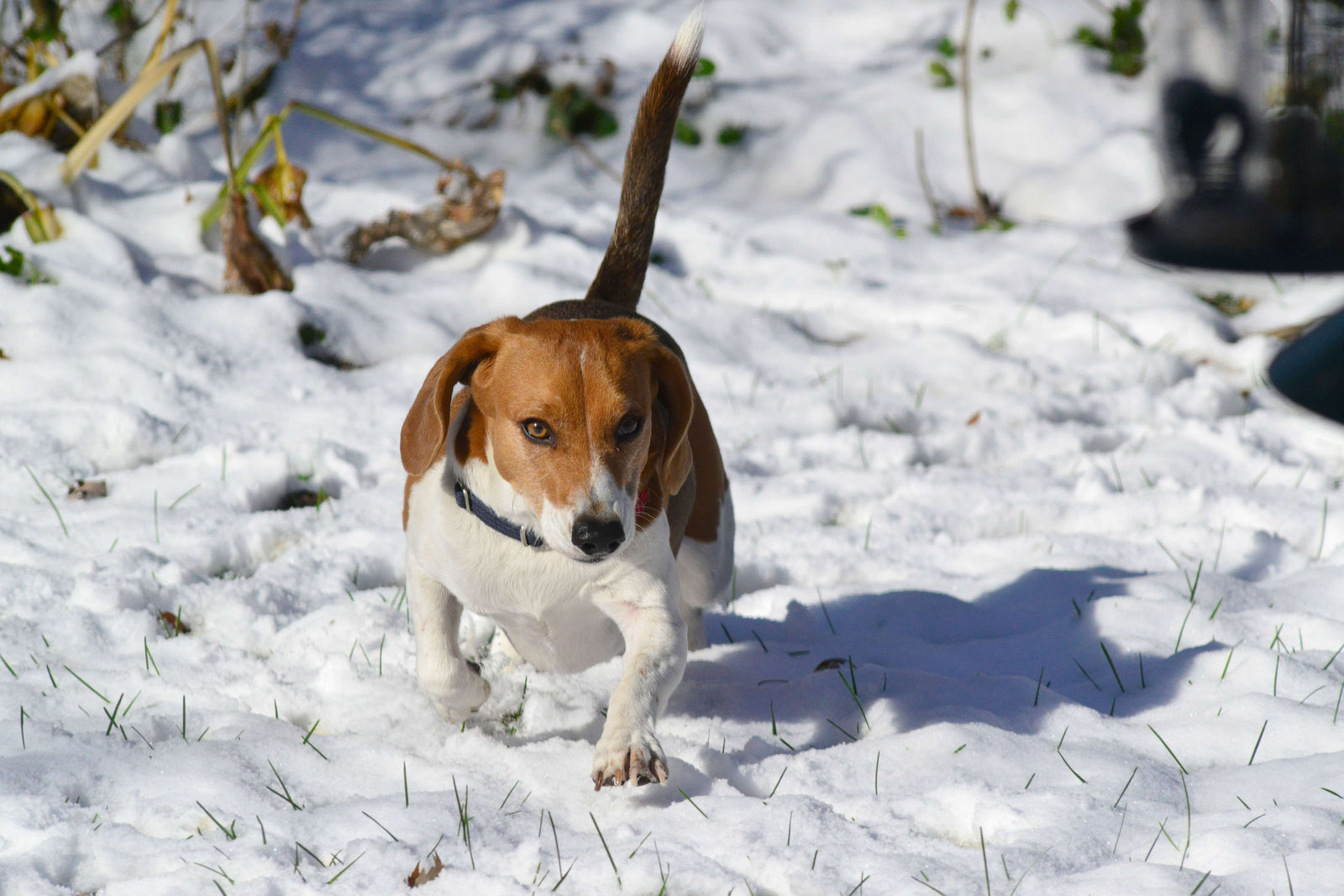

Yes, dogs can get fleas in winter. Cold weather can reduce flea activity outdoors, but fleas can survive on animals and in protected environments. Heated homes also give fleas the warmth they need to remain a problem even when temperatures outside have dropped.
Fleas do not cope well with prolonged exposure to very cold temperatures.
That is one reason flea activity may be lower outdoors during winter in colder parts of the country.
But cold weather does not automatically eliminate fleas.
Fleas can survive winter:
on dogs and other animals
on wildlife
inside heated homes
in protected areas around buildings
inside flea cocoons where they are sheltered from harsh conditions
So while winter can slow flea development outdoors, it does not guarantee your dog will be flea-free.
Dogs can pick up fleas in several ways, even when there is snow or freezing weather outside.
If fleas entered your home before winter, their life cycle may continue indoors.
Flea eggs can fall from a pet into carpets, bedding, furniture and other areas where animals spend time.
Developing fleas are particularly good at finding protected spaces.
A warm house can provide much better conditions than the winter weather outside.
Dogs are not the only animals fleas use as hosts.
Cats, wildlife and other mammals can carry adult fleas through the colder months.
Your dog may be exposed through contact with another animal or by spending time in an area where flea-carrying animals regularly rest.
Winter does not stop dogs from visiting:
boarding facilities
daycare
groomers
dog parks
friends' homes
homes with other pets
A dog does not need to spend hours outdoors to encounter fleas.
Yes.
This is one of the main reasons fleas can remain a problem during colder months.
Homes are generally warm enough to protect fleas from the extreme temperatures they would face outside.
Flea larvae can develop in protected areas such as carpets and pet resting areas, while fully developed fleas can remain protected inside their cocoons until conditions encourage them to emerge.
Heat, movement and carbon dioxide from people and animals can help trigger that emergence.
This is why a flea problem can sometimes seem to appear suddenly even in the middle of winter.
Winter flea risk can be even more straightforward in warmer parts of the United States.
In areas with mild winters, outdoor conditions may remain suitable for flea activity for much of the year.
Dogs living in warmer southern states may therefore continue encountering fleas outdoors as well as inside the home.
A drop in temperature does not necessarily mean flea exposure has stopped.
Yes.
Wild animals can carry fleas through winter and may bring them close to homes, yards, sheds, porches and crawl spaces.
Potential hosts can include animals such as:
raccoons
opossums
stray cats
rodents
other mammals moving around the property
You do not need to see wildlife regularly for it to pass through your yard.
For dogs that spend time outside, particularly on rural or wooded properties, wildlife can remain one source of flea exposure during colder months.
The signs are the same as at other times of year.
Look for:
increased scratching or biting at the skin
licking or chewing around the back, belly or hindquarters
small dark specks in the coat
irritated or reddened skin
hair loss from repeated scratching
visible fleas moving through the coat
The dark specks commonly called flea dirt are flea droppings and can be an important sign that fleas are present even when you cannot easily see an adult flea.
Remember that scratching alone does not prove your dog has fleas. Allergies, dry skin, infections and other problems can also cause itching.
If your dog is scratching constantly or has significant skin irritation, speak with your veterinarian.
Fleas can move quickly through the coat, so they are not always easy to spot.
Pay particular attention to areas such as:
around the base of the tail
lower back
belly
groin
around the neck
underneath the legs
A flea comb can help separate the coat and collect fleas or flea dirt.
If you find fleas during winter, do not assume the problem must have started recently. Fleas may already have been developing around the home before you noticed them.
Cold weather alone is not a reliable reason to assume flea protection is no longer needed.
Fleas can remain on animals and survive in heated indoor environments, while dogs in milder climates may continue encountering fleas outdoors.
If your dog is already on a regular flea-control schedule, stopping and restarting based only on the season can create gaps in protection.
Follow the treatment schedule for the product you use and speak with your veterinarian if you are unsure about the parasite risks where you live.
For the broader question of seasonal parasite protection, see our guide to whether dogs need flea and tick prevention year-round.
Treat a winter flea problem the same way you would at another time of year.
First, make sure your dog is using an appropriate flea treatment according to its directions.
If you have other suitable pets in the home, they also need appropriate protection. An untreated pet can allow fleas to continue circulating through the household.
Then concentrate on the areas where your animals spend the most time.
Useful steps include:
washing pet bedding and blankets
vacuuming carpets and rugs
vacuuming upholstered furniture
cleaning around pet sleeping areas
paying attention to cracks and protected areas under furniture
Do not automatically give your dog an extra flea treatment because you find a flea.
If treatment has already been given, check when it was administered and follow the product directions.
Not necessarily.
If there is already an infestation inside the home, newly developed fleas can continue emerging and jumping onto your dog even after treatment begins.
What matters is whether the problem is improving over time.
If you have treated your dog and are still seeing fleas, our guide to why dogs can still have fleas after treatment explains this in more detail.
If fleas repeatedly disappear and then return despite consistent treatment, there may be another source of reinfestation that needs to be addressed.
Cold outdoor temperatures can make conditions harder for fleas, but winter does not eliminate the risk.
Fleas can survive on animals, inside homes and in protected environments, while dogs living in warmer regions may continue encountering them outdoors.
Rather than assuming fleas disappear when the weather gets cold, pay attention to your dog's coat, skin and normal parasite-control routine throughout the winter.
If your dog develops severe itching, sores, hair loss or other signs of illness, speak with your veterinarian.
Last reviewed: 5 November 2026
Reviewed by our in-house veterinary team.
This article has been reviewed by the FleaTickWorm Veterinary Team to help ensure it reflects current veterinary knowledge and practical guidance for pet owners. Learn more about our Editorial Policy.


The content provided in this article is for informational purposes only and is not intended as a substitute for professional veterinary advice, diagnosis, or treatment. Always seek the advice of your veterinarian or other qualified pet health provider with any questions you may have regarding your pet's health or medical condition. Never disregard professional veterinary advice or delay in seeking it because of something you have read in this article. The information provided here is based on current veterinary research and best practices, but individual pet health needs may vary. We make every effort to ensure the accuracy of the information, but we cannot guarantee that all content is complete, current, or applicable to your pet's specific circumstances.
